
Adams County Multi-Day Arrest Log
Adams County has no official multi-day booking log. The Sheriff publishes no 72-hour, weekly, or historical blotter. Paging through the current inmate list does not rebuild an archive by arrest date. The morning population sheet reports who was held at one point in time, not every intake across several days. For multi-date reading, the Quincy Herald-Whig QPD blotter is the strongest option. It groups Quincy Police activity into dated shift blocks. Traffic stops and other events appear too. Coverage spans several dates at once. Still, it follows one city agency, so other Adams County arrests and agencies go unrecorded.
Read the Adams County Blotter
Start with a date. Keep the publishing agency in view. A newsroom date may be publication day rather than arrest day. Shift headings can span more than one date. One article may mix arrests, notices to appear, traffic stops, and lodged entries.
- Open the dated Herald-Whig QPD blotter and note its publication date.
- Read each shift heading to identify the activity date.
- Separate an arrest from a notice to appear or other police event.
- Record the stated agency, name, age, city, location, charge, and custody wording.
- Check the official Adams County inmate list if current jail custody matters.
- Use the Circuit Clerk record for later hearings and the final disposition.
Secondary copies demand the same care, with closer attention to dates. A repost can preserve older text. It may also miss later corrections. For someone booked today, skip the newsroom. Use the Adams County Arrests Last 24 Hours path instead.
Adams County Blotter Entry Fields
Herald-Whig entries carry more event context than the county list. No fixed database schema governs them. Treat the field guide below as descriptive, and never guess at a blank field.
| Blotter detail | How to read it |
|---|---|
| Date or shift | The activity block; compare it with the article's publication date. |
| Name, age, city | Basic identifiers that still require confirmation. |
| Charge | The charge reported at that stage, not a conviction. |
| Location | The place tied to the reported event, when included. |
| Lodged | A reported custody outcome at that time, not proof of present custody. |
| NTA | A notice to appear, which differs from being held in jail. |
| Photograph | No standing mugshot gallery was established by the reviewed blotter. |
Compare that with the Adams County roster fields. The jail list gives name, AC number, booked charges, bond, first-court information, and a front booking photo column. The two publications do different jobs. A blotter describes selected agency activity, while a jail report shows the population at one report time.
Quincy Arrest Reports Span Shifts
One article can bundle several QPD shifts. Archive numbering hints at an ongoing series. The exact posting cadence is not guaranteed. A missing day may simply mean no newsroom item appeared, not that Adams County had no arrests. Records also live in different hands, since city police, the Sheriff, Illinois State Police, and other agencies each hold their own. The dated QPD blotter source shows the shift-block format in practice.
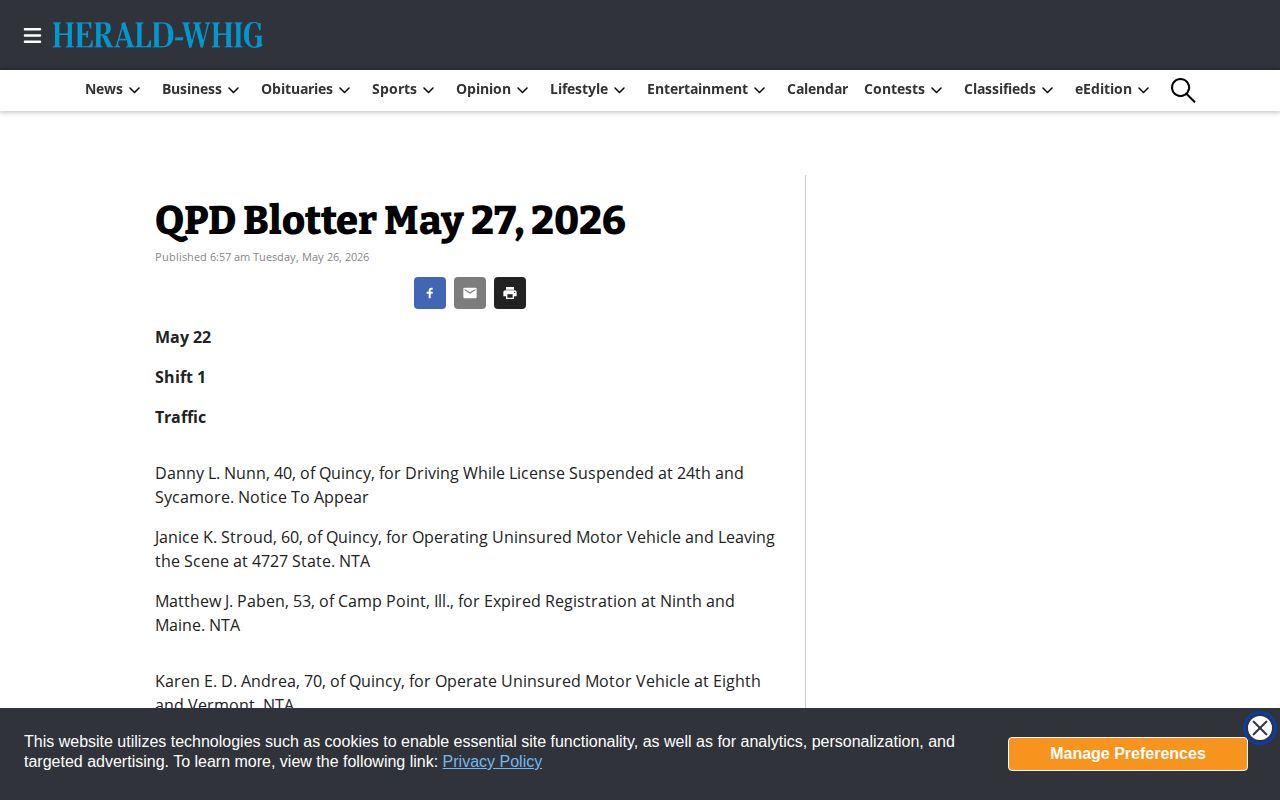
This is a news article, not a jail database.
Weekend Adams County Arrest Reports
No Adams County office promises weekend or holiday postings. The county population sheet updates each morning. A newsroom blotter depends on source material and production schedules. Several shifts can land together after a weekend. Holidays create the same lag. Do not read a gap as proof that no arrest happened. Check the current roster for anyone still held, and call the jail for a custody question. A "lodged" entry describes one point in time, since release may have followed.
Other Adams County Arrest Coverage
Other outlets widen Adams County arrest coverage. WGEM's crime section publishes rolling police and court stories from Quincy, the county, and nearby towns. Its strength is narrative follow-up. Stories can explain the alleged event or a later court step. WTAD also carries local QPD material. The Heartland Newsfeed blotter archive is another route to an older dated item. Neither is a custody list. Cross-check both against the agency, jail roster, or court file.
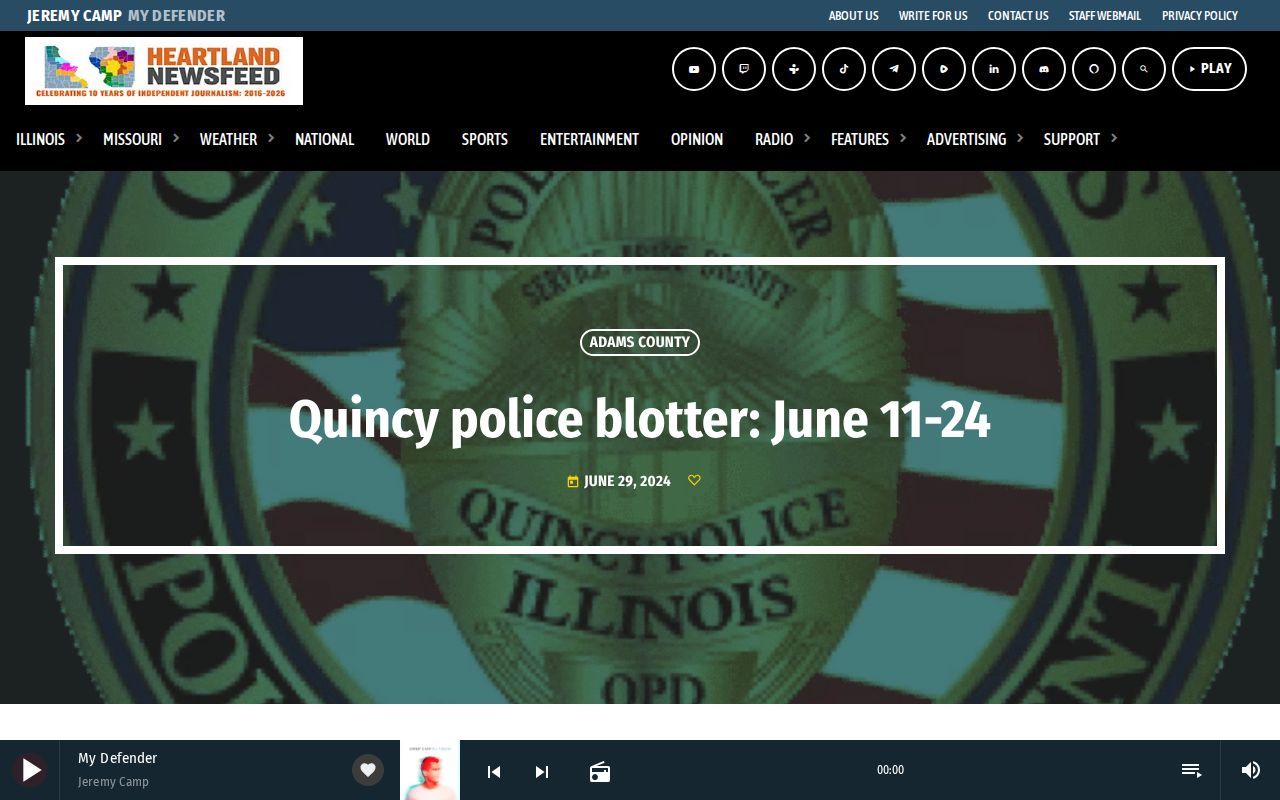
Archive copies drift from their origins. Carry the article date and original source with any fact pulled from an old file.
Adams County Arrest Archives
The Sheriff states no retention rule. Online roster entries, daily sheets, booking records, and photos can all roll off without notice. Release, transfer, correction, or a simple refresh drops a name. The underlying record survives. It stays with the Sheriff, the arresting agency, or the court. Rolling off a website is not legal destruction.
Modern records past the visible window take a targeted FOIA request. Direct it to the custodian. The Sheriff holds bookings, intake, release, and transfer records, plus jail-held photographs. Quincy Police Central Records holds QPD reports and images. Include the full name, date, location, agency, case number, and AC number when known.
Older Quincy material travels a different road. The Illinois State Archives county search lists jail registers from 1905 through 1950 and police arrest records from 1873 through 1959. It also lists police mug books from 1925 through 1940 and duty logs from 1941 through 1942. Those sit at the Western Illinois University IRAD depository. They do not prove that modern digital booking photos carried over.
Request Older Adams County Arrest Records
Send each request to the agency that made or now holds the record. The Adams County Sheriff is the practical custodian for county jail material, covering intake, custody movements, release entries, and booking photos. Want a Quincy Police incident report? QPD Central Records is the route. A different arresting agency may keep its own report even when the person was housed at the county jail.
The county FOIA form is brief. It asks for requester details, a clear description, a case number when known, and delivery preference. Email, fax, pickup, and postal mail all work. The county lists no fixed booking-photo fee. It also promises no special response period. Ask for an electronic copy when that helps, and if any part is withheld or redacted, request the specific exemption cited.
For a dated blotter event, preserve the article address, headline date, and activity date. Note the shift and reporting agency too. Then add the full name, date of birth if known, place, case number, and AC number. These details matter. They help a records officer separate similarly named people and keep the arrest report apart from the later jail record.
Quincy Arrest Logs in IRAD
The Illinois Regional Archives Depository is a research path, not a substitute for the current police blotter. It serves the listed historical period. Contact the Western Illinois University IRAD depository with the precise series name, date range, and accession number from the State Archives search. Ask about access rules, copies, and finding aids. Also ask whether a volume can be checked for a particular name or date.
Keep modern arrest records away from the archive. An online page rolling off does not change that. The 2025 IDOC jail inspection report shows the facility maintains booking and personal records. Detainees are photographed and fingerprinted during admission. It publishes no retention schedule, though, and declares no photo category public. Modern access questions stay with the records custodian.
Adams County Arrests Need Court Follow-Up
A blotter preserves an early account of an arrest. The full story lands in court. Check the Adams County Circuit Clerk for the later case record. The official court-record search is the next source for public case information. Suppressed, impounded, and confidential records may not appear there. Match identity and case details before drawing any conclusion.
Search Adams County Public Records
Treat search results as leads. Preserve source dates, and verify every arrest fact with the agency, the jail, and the Adams County court record.
Sponsored Results